



Table of Contents
- Start With Your Refractive Error and Corneal Thickness
- How to Choose the Best Vision Correction Procedure: Key Candidacy Factors
- LASIK vs PRK Recovery Time: What the First 90 Days Look Like
- EVO ICL Candidacy Requirements: Who Qualifies for an Implantable Lens
- Is LASIK Permanent? Long-Term Visual Stability Beyond 10 Years
- Matching Procedures to Your Life: Athletes, Computer Users, and Presbyopia
- What to Expect at Your Consultation and How to Prepare
- Frequently Asked Questions
Last Updated: September 11, 2026
Start With Your Refractive Error and Corneal Thickness
Learning how to choose the best vision correction procedure starts with two numbers: your refractive error and your corneal thickness. Refractive error is the measurement of how your eye bends light, expressed in diopters, and it determines which procedures can realistically correct your vision. Corneal thickness, measured in microns, determines whether laser procedures are safe for your eyes.
A common mistake is assuming LASIK is the default and everything else is a fallback. In practice, your prescription and corneal measurements often make the decision for you.
- Mild to moderate myopia: Most laser and implant options qualify
- High myopia or hyperopia: Implantable lenses often produce better visual outcomes
- Thin corneas: Surface ablation or implantable lenses instead of flap-based laser
- Irregular astigmatism: Corneal topography must rule out keratoconus first
At Schneider LASIK, every candidacy assessment begins with corneal topography and a dilated exam, because the anatomy decides more than preference does.
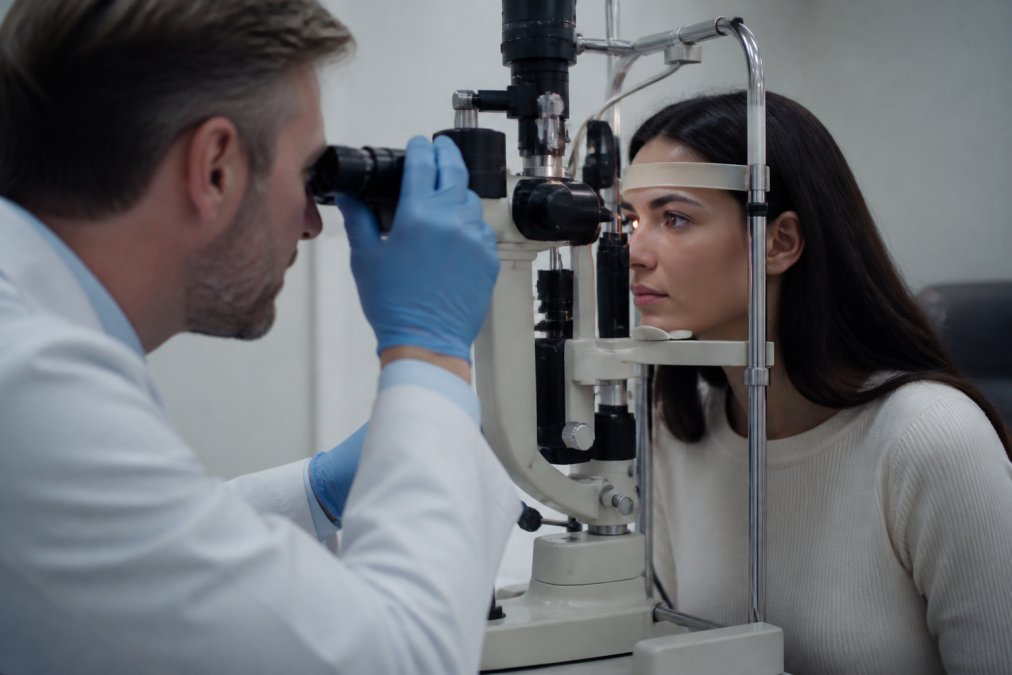
How to Choose the Best Vision Correction Procedure: Key Candidacy Factors
The best vision correction procedure is the one that matches your anatomy, age, and daily visual demands, not the one with the most advertising behind it. Candidacy assessment combines three data sets: your prescription history, your corneal measurements, and your lifestyle requirements.
Corneal Topography and Stable Prescription
Corneal topography maps the curvature of your eye and reveals irregularities that a standard prescription check misses. A stable prescription means your refraction has not shifted meaningfully for at least a year; many surgeons prefer two years of stability before refractive surgery. If your prescription is still changing, most ophthalmologists recommend waiting rather than operating.
Age, Lifestyle, and Visual Demands
Age shapes which procedures make sense. Adults in their twenties and thirties with stable prescriptions are typical laser candidates. After 40, presbyopia enters the picture, and options like monovision or Refractive Lens Exchange become relevant. Your visual demands matter just as much: a competitive tennis player and a software engineer may need different solutions from the same prescription.
| Factor | What It Affects | Why It Matters |
|---|---|---|
| Refractive error | Procedure eligibility | High corrections may exceed laser limits |
| Corneal thickness | Laser safety margin | Thin corneas raise ectasia risk |
| Prescription stability | Timing of surgery | Shifting vision produces poor long-term results |
| Age | Lens vs. laser choice | Presbyopia changes the goal of surgery |
| Lifestyle | Visual quality priorities | Night driving and sports demand different profiles |
LASIK vs PRK Recovery Time: What the First 90 Days Look Like
LASIK recovery is faster in the first week; PRK recovery is slower but steadier. Most LASIK patients report functional vision within a day or two, while PRK patients typically need several days to a week before vision feels usable and several weeks for it to stabilize.
The first 90 days break down roughly like this:
- Days 1-3: LASIK vision is often clear immediately; PRK vision is blurry and light-sensitive
- Week 1: LASIK patients return to most activities; PRK patients still notice fluctuating vision
- Weeks 2-4: Both groups see improvement, but PRK vision fluctuates more
- Months 2-3: Vision stabilizes for most patients in both groups
Dry eye syndrome is the most common complaint in both recovery paths, and it usually improves over the first few months (peer-reviewed research). Your surgeon will schedule post-operative visits to track visual acuity and corneal healing.
EVO ICL Candidacy Requirements: Who Qualifies for an Implantable Lens
EVO ICL candidacy requirements center on the cornea and the prescription range. The EVO ICL is an intraocular lens implanted behind the iris without removing your natural lens, which makes it an option for people who are not laser candidates.
Typical requirements include:
- Adequate anterior chamber depth, measured during pre-surgical screening
- A prescription within the lens’s approved correction range
- A healthy cornea and no active eye disease
- Age generally 21 to 45 for this option
The implantable lens appeals to patients with high myopia or thin corneas, because it does not remove corneal tissue. It is also removable, which some patients find reassuring during informed consent discussions. An ophthalmologist will confirm whether your eye anatomy supports the implant.
Is LASIK Permanent? Long-Term Visual Stability Beyond 10 Years
LASIK is permanent in the sense that the corneal reshaping does not reverse, but your vision can still change over time. The procedure corrects your prescription at the time of surgery; it does not stop the natural aging of the eye.
This is the part most guides skip. Two forces act on long-term visual outcomes:
- Presbyopia affects nearly everyone in their forties and fifties, regardless of surgery history
- Residual refractive drift can occur slowly, and a small number of patients pursue an enhancement years later
Most patients enjoy stable distance vision for a decade or more. If you are in your forties and already noticing reading difficulties, a monovision approach or Refractive Lens Exchange may serve you better than standard LASIK, because it addresses both distance and near vision in one plan.
Matching Procedures to Your Life: Athletes, Computer Users, and Presbyopia
Procedure choice should follow your daily visual demands, and the same prescription can point to different recommendations depending on how you use your eyes. Most guides stop at a list of activities. The more useful exercise is a decision matrix that maps your constraints to a procedure, including what to do when you are a borderline candidate.
Athletes and contact-sport participants
Flap-based LASIK carries a small but real risk of flap displacement from direct trauma, which is why the American Academy of Ophthalmology advises protective eyewear during contact sports even after LASIK. Surface ablation (PRK) and SMILE avoid a flap entirely, and an implantable lens avoids corneal tissue removal altogether. Recovery trade-off: PRK takes longer to reach functional vision, so schedule it in the off-season.
Swimmers and water-sport enthusiasts
Most surgeons ask you to stay out of pools, lakes, and oceans for one to two weeks after LASIK or PRK to reduce infection risk (aao.org). If you swim competitively, that window matters, build it into your training calendar rather than discovering it after surgery.
Heavy screen users and night drivers
Blade-free LASIK and other laser options often reduce dependence on glasses for screen work, but dry eye symptoms frequently worsen for the first three to six months. Patients with heavy screen time should discuss preservative-free lubricating drops, blinking habits, and screen-position adjustments during recovery. Night driving is a separate concern: larger pupils and higher-order aberrations can produce halos and starbursts, and some patients notice these for weeks to months. If night driving is central to your job, ask your surgeon how your pupil size and aberration profile affect your predicted night vision.
Presbyopia after 45
Monovision LASIK, which corrects one eye for distance and one for near, helps some patients reduce reliance on reading glasses, but it trades away some depth perception and can be hard to tolerate for people who do a lot of night driving. Refractive Lens Exchange replaces the aging lens entirely and is often the stronger choice for patients with early lens changes or a family history of cataracts.
The borderline-candidate decision matrix
If your measurements put you near a cutoff, use this framework:
| Your constraint | First-choice procedure | Why |
|---|---|---|
| Thin cornea (under ~500 microns) | PRK, SMILE, or EVO ICL | Preserves corneal tissue |
| High myopia (beyond laser range) | EVO ICL | Corrects higher prescriptions without tissue removal |
| Irregular topography | EVO ICL or no surgery | Laser may increase ectasia risk |
| Unstable prescription | Wait and re-measure | Operating on a moving target produces poor long-term results |
| Early cataract or age 50+ | Refractive Lens Exchange | Addresses lens and refraction together |
| Contact-sport athlete | PRK, SMILE, or EVO ICL | No flap to displace |
If two procedures both look reasonable on paper, the tiebreaker is usually recovery logistics and your tolerance for dry eye, not the marketing claims. Ask your surgeon which option they would choose for a family member with your exact measurements.
What to Expect at Your Consultation and How to Prepare
A candidacy consultation is not a sales pitch, it is a data-gathering appointment that produces a decision. Plan for one to two hours, and expect the visit to move through four stages: history, measurement, interpretation, and recommendation.
Stage 1: History and goals. Your surgeon will ask about contact lens wear, dry eye symptoms, medications (including isotretinoin and anticholinergics), prior eye injuries, family history of keratoconus or retinal detachment, and what you actually want from surgery. Be specific: “I want to stop wearing glasses for tennis” and “I want to read my phone without cheaters” point to different procedures.
Stage 2: Measurement. Expect corneal topography (a curvature map), pachymetry (corneal thickness in microns), wavefront aberrometry, a dilated fundus exam, and a manifest and cycloplegic refraction. If you wear soft contacts, most practices ask you to leave them out for at least three to seven days before measurements; toric and rigid gas permeable lenses often require longer. Contact lens warpage can make a good candidate look borderline, or the reverse.
Stage 3: Interpretation. This is where the decision is actually made. Ask your surgeon to walk you through three numbers out loud:
- Central corneal thickness (CCT). Most surgeons want a residual stromal bed of at least 250 microns after the flap and ablation (PubMed). A thin cornea pushes you toward PRK, SMILE, or an implantable lens.
- Keratometry and topography pattern. Irregular or asymmetric maps raise concern for forme fruste keratoconus and usually disqualify laser.
- Prescription stability. A change of 0.50 diopters or more in sphere or cylinder over the past year is a yellow flag; many surgeons want two years of stability.
Stage 4: Recommendation and consent. You should leave with a named procedure, a rationale tied to your measurements, and a written consent that lists the specific risks for your case, not a generic handout.
Questions worth asking your surgeon:
- How many of these procedures have you performed, and what is your enhancement rate?
- Which technology do you recommend for my cornea, and why?
- What is my predicted residual stromal bed, and what is your minimum?
- What happens if I am not satisfied, what is your enhancement policy?
- What does post-operative recovery look like for my case?
- What are my financing options?
Bring your current glasses prescription, a list of every medication and supplement you take, and a written list of your visual goals ranked by importance. Surgeons make better recommendations when they know which activities matter most to you.
Schneider LASIK offers customized vision correction based on age, prescription, and lifestyle, with financing options available. Dr. Mark Schneider has been named a Top Ophthalmologist seven times by the Consumers Research Council of America, and the practice is ranked highly by patients and local physicians.
Frequently Asked Questions
What is the difference between LASIK and PRK recovery?
With LASIK, many people notice improved vision within a day and return to normal activities quickly. PRK removes the outer corneal layer, so visual recovery can take several days to weeks, and full stabilization may take a few months. Both aim for similar long-term visual outcomes, but the timeline and comfort level differ. Your surgeon will recommend the option that fits your corneal thickness and lifestyle.
Am I a candidate for EVO ICL or LASIK?
EVO ICL candidacy requirements include a stable prescription, adequate anterior chamber depth, and healthy eye structures. LASIK typically requires sufficient corneal thickness and a prescription within treatable ranges. A comprehensive exam with corneal topography and a dilated eye evaluation will determine which procedure your eyes can safely support. Age, dry eye, and lifestyle also play a role.
Is LASIK permanent?
LASIK permanently reshapes the cornea, so the treatment itself does not reverse. However, natural aging can still cause vision changes, such as presbyopia after age 40. Most people enjoy stable distance vision for many years. A small number may need an enhancement later. Your surgeon can discuss long-term expectations based on your prescription and age.
How do I know which vision correction procedure is best for me?
The right vision correction procedure depends on your refractive error, corneal thickness, age, lifestyle, and visual demands. A consultation with a qualified ophthalmologist includes corneal topography, wavefront analysis, and a discussion of your goals. Bring questions about recovery time, long-term stability, and cost. The decision should be personalized, not based on a single factor like price or popularity.
Choosing a vision correction procedure is a decision about your anatomy, your age, and how you want to live. Schneider LASIK combines blade-free LASIK technology, customized treatment planning, and a team experienced across LASIK, PRK, EVO ICL, and Refractive Lens Exchange. Schedule a consultation with Schneider LASIK to find out which procedure fits your eyes.