



Table of Contents
- Why Your Choice of Eye Doctor in Rancho Cucamonga Matters
- Optometrist vs Ophthalmologist: Which One Do You Need?
- Top Eye Doctors in Rancho Cucamonga: A Review of Local Care Options
- LASIK Surgery Candidacy Requirements: What to Expect
- Cost of Eye Exam Without Insurance: A Transparent Look
- How to Choose the Right Provider for Your Vision Needs
- Conclusion: Your Next Step to Clear Vision in Rancho Cucamonga
- Frequently Asked Questions
Last Updated: September 4, 2026
Why Your Choice of Eye Doctor in Rancho Cucamonga Matters
Your vision is your primary gateway to the world, yet many people spend more time researching a new phone than they do choosing an eye doctor rancho cucamonga residents can trust. Picking the wrong provider type can delay important treatment or waste your time and money.
This guide from Schneider LASIK breaks down the practical differences between optometrists and ophthalmologists, reviews local care options, and gives you a transparent look at costs and candidacy so you can make a confident, informed decision.
The type of doctor you see directly determines which services you can access. An optometrist is your primary care provider for vision, while an ophthalmologist is a medical doctor who can perform surgery. Below we’ll show you exactly how to match your needs to the right professional.
Optometrist vs Ophthalmologist: Which One Do You Need?
An optometrist provides primary vision care, including comprehensive eye exams, contact lens fittings, and management of common conditions like dry eye. An ophthalmologist is a medical doctor (MD or DO) who specializes in surgical and medical treatment of eye diseases, including LASIK, cataract surgery, and glaucoma management (aao.org). The choice depends on whether you need routine maintenance or surgical intervention.
For routine vision needs, an optometrist handles your annual check-up, updates your glasses prescription, and screens for common issues like glaucoma and cataracts.
However, if you are exploring permanent vision correction, you need an ophthalmologist. According to the American Academy of Ophthalmology’s patient education resources, ophthalmologists are uniquely qualified to perform refractive surgery like LASIK and PRK. While optometrists manage your day-to-day eye health, they do not perform surgery; they typically co-manage your care with a surgeon.
The rule of thumb: need glasses or contacts? See an optometrist. Want freedom from glasses, or have a diagnosed condition like cataracts? Seek an ophthalmologist.
Top Eye Doctors in Rancho Cucamonga: A Review of Local Care Options
Rancho Cucamonga residents have access to a full spectrum of eye care, from local optometry clinics for glasses and contacts to surgical centers for vision correction. The “best” choice depends on your specific diagnosis and goals.
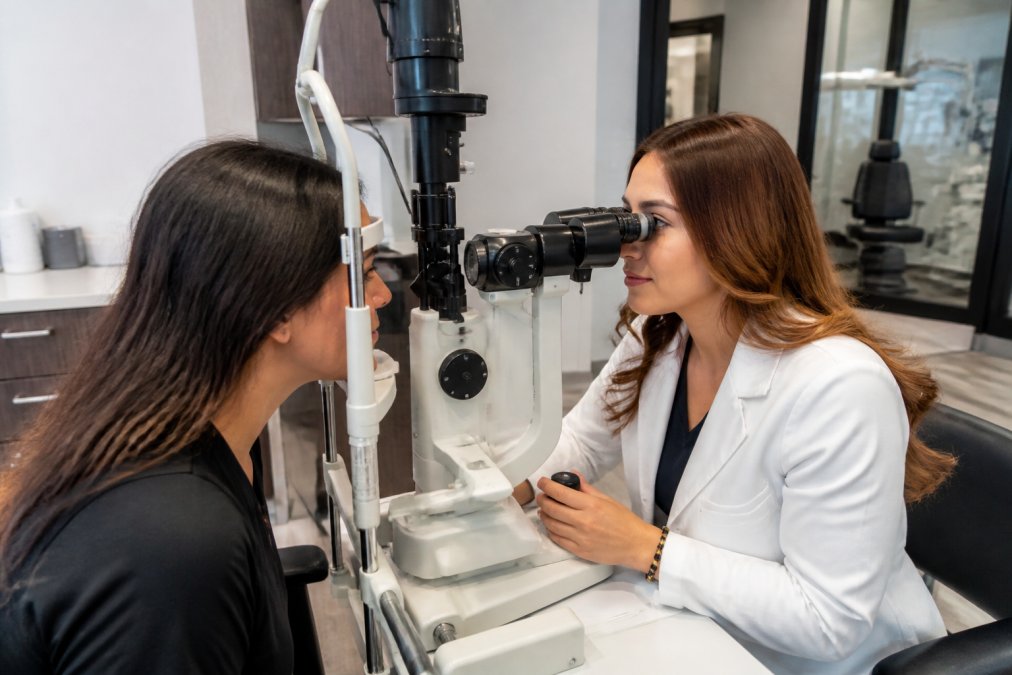
When evaluating local providers, you are generally choosing between two paths: routine medical care and elective surgical correction.
Comprehensive Eye Exams and Routine Vision Care
For annual check-ups, diabetic eye care, and pediatric vision, local optometrists are your first stop. They excel at diagnosing refractive errors, updating prescriptions, and detecting retinal health issues and macular degeneration, referring you to a specialist if needed. If you have vision insurance through your employer, these visits are typically the most accessible and affordable option.
Advanced Surgical Vision Correction with Schneider LASIK
When the goal shifts from managing vision to correcting it permanently, the conversation changes entirely. Schneider LASIK is a premier vision correction practice that focuses exclusively on surgical solutions, using state-of-the-art exam technology to perform customized procedures like blade-free LASIK, PRK, and EVO ICL.
Adults aged 18-60 who are tired of the daily hassle of glasses and contacts and are seeking a permanent reduction in their dependence on corrective lenses.
The practice is led by Mark Schneider, M.D., who has been named a “Top Ophthalmologist” seven times by the Consumers Research Council of America. Unlike a general clinic, a dedicated surgical center focuses on perfecting one outcome: your unaided visual acuity.
LASIK Surgery Candidacy Requirements: What to Expect
LASIK surgery candidacy is determined by a comprehensive evaluation of your corneal thickness, pupil size, refractive error stability, and overall ocular health. Not everyone is a candidate, and a thorough pre-operative exam is the only way to know for sure.
LASIK is not a one-size-fits-all procedure. Candidacy hinges on several specific factors:
- Stable Prescription: Your vision prescription must be stable for at least one year prior to surgery.
- Corneal Thickness: Sufficient corneal tissue is required to safely create the flap and reshape the underlying tissue.
- Age and Lifestyle: Your age affects healing, while your lifestyle (e.g., competitive sports, frequent swimming) often dictates whether the investment is worth it.
- Ocular Health: Conditions like severe dry eye syndrome or keratoconus can disqualify you from the procedure.
At Schneider LASIK, the evaluation process is designed to be honest. If you are not a candidate, the team will discuss alternatives like PRK or Refractive Lens Exchange rather than pushing you toward an inappropriate surgery.
Do not rely on a standard eye exam to determine LASIK candidacy. Routine exams do not measure corneal topography or pupil size with the precision required for surgical planning. You need a dedicated surgical consultation.
Cost of Eye Exam Without Insurance: A Transparent Look
The cost of an eye exam without insurance is a significant barrier for many residents, but it is distinct from the cost of surgical consultation. Routine exams typically include a visual acuity test and a glasses prescription check, a fraction of the diagnostic workup required for surgery.
What You Can Expect to Pay Out of Pocket
While prices vary by practice, most independent optometry clinics in the region charge between $80 and $150 for a standard comprehensive eye exam for uninsured patients (the CDC). This fee typically includes:
- Visual acuity testing
- Refraction (the “which is better, one or two” test)
- Glaucoma screening via tonometry
- A dilated retinal exam or retinal imaging
Specialty exams cost more. Contact lens fittings add $50 to $120 on top of the exam fee. Pediatric exams may run slightly higher. If you have a medical condition like diabetes or high blood pressure, the exam may be billed as a medical visit, increasing the cost to $150 to $250.
Why Retinal Imaging Is Worth the Extra Fee
Many budget clinics advertise a low exam price but do not include retinal imaging. A standard exam uses an ophthalmoscope to look at the back of your eye, but it cannot capture a wide-field, high-resolution image of your retina. Retinal imaging, sometimes called optomap or fundus photography, creates a permanent digital record your doctor can compare year over year.
When comparing costs, ask what is included in the exam. A $50 exam that lacks retinal imaging may not be a bargain if you have a family history of glaucoma or macular degeneration. Comprehensive imaging is often billed separately, typically adding $25 to $50 to your total.
Surgical Consultation Fees Are Different
If you are considering LASIK or PRK, the consultation fee is not the same as a routine exam fee. A surgical consultation at a dedicated refractive surgery center like Schneider LASIK includes advanced diagnostics a standard optometry visit does not:
- Corneal topography to map the surface curvature of your eye
- Pachymetry to measure corneal thickness
- Wavefront analysis to detect higher-order aberrations
- Pupil size measurement under low-light conditions
These tests require specialized equipment a general optometry clinic may not have on hand. Surgical consultation fees typically range from $100 to $250. Many practices, including Schneider LASIK, apply this fee toward your procedure if you are a candidate and choose to move forward.
How to Save on Out-of-Pocket Costs
If you are uninsured, ask about these options before booking:
- Membership plans: Many independent practices offer annual plans ($100 to $200) that bundle one exam with discounts on glasses or contacts.
- FSA or HSA dollars: If you have a flexible spending account or health savings account through your employer, you can use those pre-tax funds for exams, glasses, and even LASIK.
- Cash discounts: Some practices offer a 5% to 10% discount if you pay in full at the time of service.
- Charitable programs: Organizations like Vision USA and the American Academy of Ophthalmology’s EyeCare America program provide free or low-cost exams for qualifying uninsured individuals.
Do not rely on a standard eye exam to determine LASIK candidacy. Routine exams do not measure corneal topography or pupil size with the precision required for surgical planning. You need a dedicated surgical consultation, and that fee is separate from a routine exam fee.
For those paying out of pocket, the most important question to ask before booking is simple: “What is your complete fee schedule, and what does it include?” A transparent practice will give you a clear answer over the phone without requiring you to come in first.
How to Choose the Right Provider for Your Vision Needs
Choosing the right provider isn’t just about matching your symptom to a specialty, it’s also about understanding how your insurance benefits work. Most local clinic pages list which plans they accept, but they rarely explain the difference between in-network and out-of-network coverage.
Step 1: Verify Your Benefits Before You Book
Before scheduling any appointment, call your insurance carrier directly or log into your online member portal. Ask these three specific questions:
- Is this provider in-network or out-of-network for my plan? In-network means the provider has a negotiated rate with your insurer, which typically lowers your out-of-pocket cost. Out-of-network means you may pay the full fee upfront and submit a claim for partial reimbursement.
- Does my plan cover a routine eye exam separately from a medical eye exam? Many plans distinguish between a “routine” visit (checking your prescription) and a “medical” visit (diagnosing dry eye, infections, or glaucoma). The same chair and the same doctor can bill under either code, and your copay can differ by $50 or more depending on which code is used.
- Is LASIK or other refractive surgery covered? Most standard health insurance plans classify LASIK as elective and do not cover it. However, some employer-sponsored plans offer a vision rider or a flexible spending account (FSA) that lets you set aside pre-tax dollars for the procedure.
Do not assume that because a practice “accepts” your insurance, every service is covered. Contact lens fittings, retinal imaging, and corneal topography are often billed as separate diagnostic codes and may not be included in a standard exam benefit.
Step 2: Compare Out-of-Network Reimbursement Rates
If you are considering a surgical center like Schneider LASIK that may not be in-network with your vision plan, ask for a “superbill”, an itemized receipt with CPT codes, to submit to your insurer. Many plans reimburse a portion of out-of-network surgical consultations, which can offset the consultation fee.
Vision insurance plans (like VSP or EyeMed) typically cover routine exams at local optometry clinics, while major medical plans (like Anthem Blue Cross or UnitedHealthcare) cover medically necessary treatments. If you have both, ask your provider’s billing team which plan they recommend billing first.
Step 3: Ask About Cash Pricing and Membership Plans
If you are uninsured or have a high-deductible plan, many independent optometry practices offer annual membership plans that bundle a comprehensive exam with a discount on glasses or contacts. These plans typically range from $100 to $200 per year and can be more cost-effective than paying per visit.
For surgical consultations, ask upfront whether the consultation fee is credited toward the procedure if you proceed. This single question can save you $150 to $300 depending on the practice.
Step 4: Match the Provider to the Complexity of Your Condition
The table below summarizes the practical decision path, but the real differentiator is asking the right questions during your first call:
| Your Need | Recommended Provider | Key Questions to Ask |
|---|---|---|
| Routine check-up or glasses renewal | Optometrist | Is the exam comprehensive? Do you offer retinal imaging? |
| Contact lens fitting (including specialty) | Optometrist | Do you fit toric or multifocal lenses? What is the fitting fee? |
| Dry eye or allergy management | Optometrist | What therapies do you offer? Are they covered by my medical insurance? |
| LASIK, PRK, or ICL consultation | Ophthalmologist (Surgical Center) | What technology do you use? Is the consult fee credited toward surgery? |
| Cataract or glaucoma evaluation | Ophthalmologist | What are my surgical options? Do you accept Medicare assignment? |
The best provider is not just the one with the best reviews, it is the one whose billing practices align with your coverage. Call your insurer first, ask about separate diagnostic codes, and always confirm whether consultation fees are credited toward treatment.
For those with high visual demands, such as athletes or professionals in the Inland Empire, the stability of vision correction matters. If you want to eliminate the need for glasses for good, a consultation with an ophthalmologist who specializes in refractive surgery is the logical next step, but only after you have verified your out-of-network benefits and understand your total out-of-pocket exposure.
Conclusion: Your Next Step to Clear Vision in Rancho Cucamonga
Choosing between routine care and surgical correction is the first hurdle, but the second is finding a team you trust with your eyesight. Many patients express anxiety about the permanence of surgery, which is why working with a practice that prioritizes safety and personalized care is essential.
If you are ready to reduce your dependence on glasses and contacts, the next step is a consultation to determine your candidacy.
Get started with Schneider LASIK and schedule your consult to explore your vision correction options today.
Frequently Asked Questions
What is the difference between an optometrist and an ophthalmologist?
An optometrist is your primary care provider for routine vision needs, performing comprehensive eye exams, prescribing glasses and contacts, and managing common conditions like dry eye. An ophthalmologist is a medical doctor who can perform surgery and treat complex eye diseases. For standard check-ups, an optometrist is often your first stop. For surgical procedures like LASIK or cataract evaluation, you need an ophthalmologist’s expertise.
How much does an eye exam cost without insurance in Rancho Cucamonga?
The cost of an eye exam without insurance varies by provider and the complexity of the test. A standard comprehensive exam is typically less than a visit that includes specialized testing for conditions like glaucoma or retinal health. Contact lenses require a separate fitting fee. To get the most accurate picture, call local practices for a transparent price quote. Many offer cash-pay discounts or membership plans to make routine care more affordable.
How do I know if I am a candidate for LASIK surgery?
LASIK surgery candidacy requirements depend on several factors, including a stable prescription, healthy corneas with sufficient thickness, and overall ocular health. Your age and lifestyle also play a role. Conditions like severe dry eye or very high prescriptions may rule out LASIK but could qualify you for other procedures like PRK or EVO ICL. A thorough evaluation with corneal topography is the only way to confirm if you meet the requirements.
Does vision insurance cover LASIK or other corrective procedures?
Most standard vision insurance plans cover routine eye exams and glasses or contacts, but they do not cover elective refractive surgery like LASIK. However, many practices offer financing options to make the procedure more manageable. It is worth checking if your plan offers a discount with specific surgical providers. You can also use a flexible spending account (FSA) or health savings account (HSA) to pay for surgery with pre-tax dollars, which reduces the overall cost.