


Last Updated: October 29, 2026
Quick Summary
The best eye drops for contact lens wearers are products explicitly labeled as safe for in-eye use with contacts, matched to your lens type, dosing frequency, and symptoms. Thin rewetting drops suit midday dryness, preservative-free vials suit sensitive eyes or dosing more than four times daily, and thicker gel drops suit evening or severe dryness only if labeled for lens use. Avoid decongestants and any drop not labeled for contact lenses.
- Rewetting drops go in while lenses stay on; thicker dry-eye drops may need lens removal first.
- Preservative-free vials are the starting point if you dose more than four times a day.
- Benzalkonium chloride is the preservative most often flagged for lens wearers and sensitive eyes.
- Biotrue Hydration Boost was named best for contact lens wearers in Health.com’s 2026 roundup at roughly $20.00.
- Remove lenses and seek clinical advice for eye pain, marked redness, light sensitivity, discharge, or vision changes.
Table of Contents
- Why Contact Lens Wearers Get Dry Eyes
- Contact Lens Rewetting Drops vs. Dry-Eye Drops
- How to Find Eye Drops Safe to Use With Contact Lenses
- Preservative-Free Eye Drops for Contacts: Who Needs Them
- Best Eye Drops for Contact Lens Wearers: Side-by-Side Comparison
- Eye Drops for Dry Eyes With Contacts: Getting Relief Right
- How to Apply Drops While Wearing Lenses (and Store Them Safely)
- When Dry Eyes Are a Sign to Ask About Vision Correction
- Frequently Asked Questions
Why Contact Lens Wearers Get Dry Eyes
Soft contact lenses sit on the cornea and compete with your natural tear film for oxygen and moisture. A review of 13 studies indexed in the National Library of Medicine research on lubricating drops for contact lens discomfort confirms that lubricating drops are a common and effective way to manage these symptoms in adults.
Many contact lens wearers describe the same complaint: “I’ve worn contacts for 20 years and my eyes are always irritated.” Long wearing schedules, heated offices, and screen-heavy workdays all make it worse. For a deeper look at causes and relief, read Having Trouble With Dry Eyes?.
Contact Lens Rewetting Drops vs. Dry-Eye Drops
Rewetting drops are formulated to be applied while lenses stay in your eyes. Dry-eye drops are often thicker and may need to go in after lens removal.
The distinction matters more than most shoppers realize. According to Acuvue’s contact lens care guidance, many standard dry-eye or allergy drops contain ingredients that can damage or discolor contact lenses. Only products specifically labeled for contact lens use belong in your eyes during wear.
A practical rule is to check the label before every purchase. If it doesn’t say “for contact lenses,” take the lenses out first.
How to Find Eye Drops Safe to Use With Contact Lenses
Compatibility is a labeling question, not a guess. Eye drops safe to use with contact lenses carry explicit lens-compatible labeling, and that label is your first filter.
Work through these criteria before you buy:
- Lens-compatible labeling: the bottle or box states it is safe during lens wear
- Preservative status: preservative-free options suit sensitive eyes and frequent dosing
- Formulation type: thinner rewetting drops for daytime, thicker gel drops for heavy dryness
- Single-use vs. multi-dose: vials avoid preservatives entirely; bottles last longer
- Ingredient review: avoid decongestants, which constrict vessels without fixing the cause
One more warning worth stating plainly. Contact Lens Spectrum reporting on counterfeit eye products identified counterfeit eye drop products that tested positive for bacterial contamination. Buy from reputable retailers, never from unfamiliar marketplace sellers.
Preservative-Free Eye Drops for Contacts: Who Needs Them
Preservative-free eye drops for contacts are often considered for people who dose frequently, have sensitive eyes, or react to standard bottles.
Preservatives keep multi-dose bottles sterile, but repeated exposure can irritate the surface of the eye. Insight Vision’s guidance on preservative-free formulations notes that preservative-free drops are increasingly cited as the preferred option for avoiding irritation. Single-use vials cost more per dose, but they eliminate the preservative question entirely.
If you wear lenses daily and reach for drops constantly, start with preservative-free vials. Your eyes will tell you quickly whether it matters.
Best Eye Drops for Contact Lens Wearers: Side-by-Side Comparison
The most suitable eye drops for contact lens wearers are generally those labeled for in-eye use with contacts, matched to lens material, dosing frequency, and symptom pattern. Instead of ranking brands, use the criteria below to compare any product on the shelf. The table maps common formulation types to the wearer profiles they suit.
| Formulation type | Best for | Preservative status | Use while wearing lenses | Key trade-off |
|---|---|---|---|---|
| Thin rewetting drops | Midday dryness during wear | Often preserved | Yes, if labeled | Frequent dosing; may need reapplication |
| Preservative-free vials | Sensitive eyes, dosing more than four times daily | Preservative-free | Yes, if labeled | Higher cost per dose; single-use waste |
| Gel or thicker lubricant drops | Evening or severe dryness | Varies | Only if labeled | Can blur vision briefly after instillation |
| Dry-eye lubricants | Overall tear film support | Varies | Only if labeled | Some formulas are intended for lens-free eyes |
| Allergy drops | Itch and seasonal symptoms | Varies | Only if labeled | Many allergy formulas are not lens-compatible |
Read the label like a clinician
Compatibility is a labeling question first. Look for explicit language that the product is safe for use with contact lenses. Then check these label elements:
- Active lubricant: hyaluronic acid, carboxymethylcellulose, hydroxypropyl methylcellulose, glycerin, and propylene glycol are common lubricants; thinner formulas tend to suit daytime rewetting, thicker ones suit bedtime.
- Preservative: benzalkonium chloride is the preservative most often flagged for lens wearers and sensitive eyes; products labeled preservative-free avoid it entirely.
- Decongestants: ingredients such as tetrahydrozoline or naphazoline constrict vessels and can cause rebound redness; they are not a dryness fix.
- Intended use statement: a product labeled for lens-free eyes should not go in while lenses are on the eye.
Match the drop to your lens type and schedule
- Soft hydrogel and silicone hydrogel lenses: most lens-compatible rewetting drops are labeled for these materials; silicone hydrogel lenses generally transmit more oxygen, but that does not eliminate dryness from long screen time or low humidity.
- Daily disposable lenses: a preservative-free vial paired with a fresh lens each day simplifies the hygiene picture.
- Rigid gas-permeable lenses: check the label specifically; some rewetting products are intended for soft lenses only.
- Extended wear: if you sleep in lenses, confirm the drop is labeled for that use and follow the lens manufacturer’s wear schedule.
A well-known example in the rewetting category is Biotrue Hydration Boost, which Health.com’s 2026 eye drop roundup named best for contact lens wearers and priced at roughly $20.00. It is one option among several; the label and ingredient list matter more than the brand.
If you dose more than four times a day, start with preservative-free vials. If you need thicker relief only at bedtime, a gel labeled for lens use can be a reasonable second product.
Best for: daily wearers who need midday moisture. Skip if: you need medicated relief for a diagnosed condition, or the label does not explicitly permit use with your lens type.
Eye Drops for Dry Eyes With Contacts: Getting Relief Right
Relief comes from matching the drop to the moment. Use thin rewetting drops during wear, thicker gel drops before bed, and preservative-free vials when you dose often. CooperVision’s guidance on decongestant drops warns against “get the red out” products, which mask redness without addressing dryness and can cause rebound irritation.
A 2026 study reported by Optometry Times on Xiidra for contact lens wearers found that Xiidra may suit symptomatic wearers who get no relief from standard options. That is a prescription decision, not a drugstore one. For a broader look at treatment options, read our guide to the best treatment for dry eye syndrome.
How to Apply Drops While Wearing Lenses (and Store Them Safely)
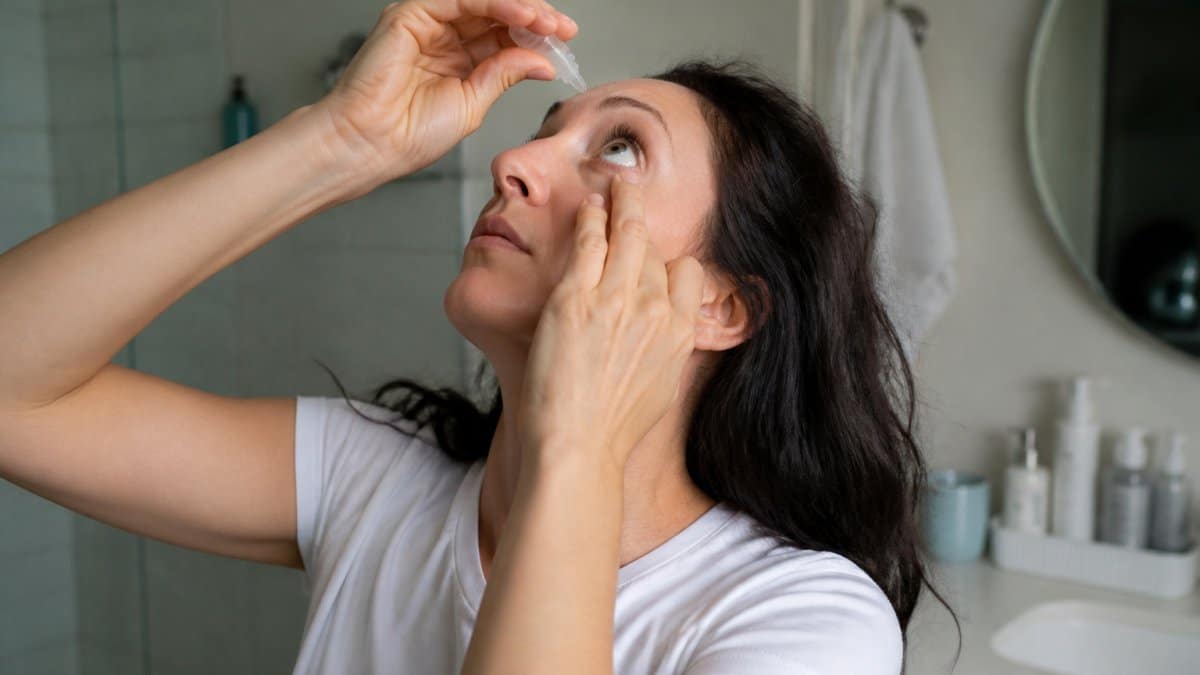
Application technique decides whether a drop helps or just runs down your cheek. Wash your hands with soap and water and dry them before touching the bottle. Tilt your head back, pull the lower lid down gently to form a pocket, and place one drop into the pocket without touching the bottle tip to your eye, lashes, or skin.
Storage and hygiene habits that prevent irritation
- Cap immediately: close the bottle right after each use; an open bottle invites contamination.
- Keep it clean: never touch the tip to any surface, including your fingers, the cap interior, or a countertop.
- Store at room temperature: keep bottles away from direct sunlight and out of the bathroom if humidity is high.
- Do not share: eye drops are personal; sharing a bottle can transfer bacteria.
- Respect expiration dates: discard multi-dose bottles per the label’s guidance after opening, even if product remains. Single-use vials should be used once and thrown away.
- Watch for changes: cloudy solution, a changed color, or a damaged tip are reasons to discard the bottle.
Using an expired or contaminated bottle is a common cause of irritation that people blame on their lenses. If a drop burns or stings more than usual, stop using it and check the label and expiration date.
When to remove lenses before using drops
Some products, including many allergy and dry-eye formulas, are intended for lens-free eyes. If the label does not explicitly permit use during lens wear, remove your lenses first, instill the drop, and follow the product’s guidance on when lenses can go back in. When in doubt, treat the drop as lens-free and remove the lenses.
Symptoms that need professional assessment
Routine dryness is one thing; these symptoms are another. Remove your lenses and seek prompt clinical advice for eye pain, marked redness, light sensitivity, discharge, or vision changes that do not clear with blinking. Those signs can indicate infection or corneal injury and are not a reason to add another over-the-counter drop.
When Dry Eyes Are a Sign to Ask About Vision Correction
Chronic dryness despite good lens habits deserves a professional look. Persistent irritation, blurred vision that clears with blinking, or discomfort that wakes you are symptoms worth assessing rather than managing with more drops.
For some people, reducing time in lenses or moving to lens-free vision may be worth discussing with an eye-care professional. Our article on whether LASIK fixes dry eyes from contacts explains what surgery can and cannot change. If you are weighing options, our guide to choosing the best vision correction procedure breaks down how age, prescription, and lifestyle shape the decision. When you are ready to explore lens-free vision, you can schedule a vision correction consult.
Frequently Asked Questions
Is it okay to use regular eye drops while wearing contacts?
Not all of them. Many standard dry-eye and allergy drops contain preservatives or ingredients that can build up on soft lenses, discolor them, or irritate the eye during wear. Only use drops specifically labeled for contact lens use, or take your lenses out first. If a bottle does not say it is compatible with lenses, remove them before applying. When in doubt, check with your eye-care professional before putting anything in your eye while wearing lenses.
What is the difference between rewetting drops and lubricating eye drops?
Rewetting drops are made to re-wet lenses and the eye during wear, so they are formulated to be compatible with contact lens materials. Lubricating drops, often called artificial tears, are aimed at dry eye symptoms and may or may not be safe during lens wear. Some lubricants are thicker or contain preservatives that are not ideal for lenses. Read the label: if it says safe for use with lenses, it can go in during wear; if not, remove your lenses first.
Can you use preservative-free eye drops with contact lenses?
Yes, and many wearers prefer them. Preservative-free eye drops for contacts come in single-use vials, which avoids the repeated exposure to preservatives that can irritate sensitive eyes and build up on lens surfaces. They cost more per use and you discard the vial after opening, but for people who apply drops several times a day, the trade-off is often worth it. Check that the product is labeled for contact lens use as well.
Should you remove contact lenses before using eye drops?
Only if the drop is not labeled for use with lenses. Drops made for contact lens wearers can be applied during wear. Decongestant get-the-red-out drops and most allergy drops are not meant for use with lenses in, so take your lenses out first and wait as directed before putting them back. If your eyes stay red, irritated, or painful, stop using the drops and see an eye-care professional for an assessment.
Dry, irritated eyes are not something you have to accept as the price of wearing contacts. If drops only get you through the day, it may be time to look at the underlying cause. Schneider LASIK offers blade-free LASIK and customized vision correction built around your age, prescription, and lifestyle, with a highly experienced medical team and convenient locations across Southern California. Get started with Schneider LASIK and find out whether life without contacts is within reach.