


Last Updated: November 18, 2026
Quick Summary
Swimming after LASIK is staged, not a single date: no water at all during days 1-7, brief pool time often cleared at weeks 2-3, and most surgeons clear calm open water around week 4. Your own surgeon sets your clearance date based on how your corneal flap is sealing at each follow-up visit.
- PRK removes the corneal surface instead of creating a flap, so many surgeons extend the no-swimming window to three or four weeks or longer.
- Goggles reduce but do not eliminate risk, since water can leak in and pressure can build.
- Start back with easy laps in a clean, well-maintained pool and keep goggles on for the entire session.
- Skip the hot tub and sauna, which harbor bacteria and heat.
- Rubbing your eyes with wet hands after a swim can dislodge a flap that is still sealing.
Table of Contents
- How Long After LASIK Can I Swim?
- The LASIK Recovery Timeline for Swimmers
- Why Swimming Too Soon Affects Healing
- Goggles After LASIK: What They Do and Don’t Protect
- Swimming After PRK: How the Timeline Differs
- Getting Back to Training: Pool and Open-Water Precautions
- Book a Clearance Consultation Before Your Next Lap
- Frequently Asked Questions
How Long After LASIK Can I Swim?
Surgeon guidance on when to resume swimming after LASIK varies, and many surgeons advise a waiting period before pools, lakes, and oceans. Your surgeon sets the timeline for your own recovery. The exact date depends on your surgeon’s findings at each follow-up visit. (Source: American Academy of Ophthalmology)
At Schneider LASIK, we tell every swimmer the same thing: your clearance date is personal, not generic. The FDA’s LASIK patient information page advises avoiding swimming during healing but leaves the timeline to your surgeon. That gap is why you’ll hear different answers from different practices.
Why the Answer Varies From Surgeon to Surgeon
Guidance differs from practice to practice, and no single national standard exists. Surgeons weigh how your corneal flap is sealing, your dry eye level, and how much you actually swim. A casual vacation swimmer and a competitive lap swimmer may get different green lights. Follow your own surgeon’s instructions over anything you read online, including this guide.
The LASIK Recovery Timeline for Swimmers
Swimming after LASIK follows a staged return, not a single date. Your eyes heal in phases, and water exposure carries different risks at each one. Most practices give patients one blanket clearance date, which is why swimmers often get vague answers. A more useful approach separates the return by how you actually use the water: casual swimming, lap training, competition, and open-water swimming each carry different exposure times, different water quality, and different consequences if something goes wrong.
A general staged timeline for swimmers is outlined below, and you can read the full breakdown of what recovery feels like before you plan your first lap.
| Stage | Typical timeframe | Casual swimming | Lap training | Competition | Open water |
|---|---|---|---|---|---|
| Immediate healing | Days 1-7 | No water at all, including shower splash to the eyes | No | No | No |
| Early healing | Weeks 2-3 | Often cleared for brief, still pool time once the surgeon confirms flap sealing | Easy laps in a clean, well-maintained pool, goggles on | Usually not yet | No |
| Extended healing | Week 4 | Comfortable in pools | Build volume gradually, stop if the eye feels irritated | Light practice, no diving or flip-turn eye exposure | Most surgeons clear calm, clear water |
| Full return | Month 2+ | As tolerated | Full training as tolerated | Full competition as tolerated | Open water as tolerated, with precautions |
The mechanism behind the staging is the corneal flap. After LASIK, a thin layer of corneal tissue is folded back and replaced, and it seals over days and weeks rather than hours. Pool water, lake water, and salt water can carry organisms and irritants into that healing surface, and the longer your eye is submerged and the more pressure the water puts on it, the more exposure you accumulate. That is why a two-minute wade in a pool and a 45-minute masters workout are not the same risk even on the same calendar day.
Watch out: a common pattern is for swimmers to treat the first pool clearance as permission for a full workout. Start gradually and add volume only if the eye stays quiet afterward.
Timelines also vary by procedure and by patient. PRK removes the surface layer instead of creating a flap, and many surgeons extend the no-swimming window to three or four weeks or longer. Let your surgeon’s findings at each follow-up visit set your actual dates.
Why Swimming Too Soon Affects Healing
Water exposure during early healing can undo progress. After LASIK, a thin flap of corneal tissue is folded back and replaced. It seals over days and weeks, not hours. Pool water, lake water, and salt water can carry organisms and irritants, which is why surgeons restrict water exposure during healing.
The risks associated with swimming during early healing include:
- Infection in the flap interface, which can threaten vision
- Irritation and inflammation from chlorine or salt
- Dry eyes that slow the surface from smoothing out
- Discomfort that tempts you to rub your eyes, which can dislodge the flap
Because these complications can be serious, it is worth reviewing the official LASIK risk and complication facts before surgery day.
Infection Risk From Pool, Lake, River, and Ocean Water
All water is not equal. A chlorinated pool carries chemical irritation and, occasionally, organisms that survive treatment. Lakes, rivers, and oceans carry bacteria, parasites, and debris. Ocean salt water stings and dries the surface. Rivers and lakes near runoff can be the riskiest of all. No body of water is sterile, and “it looked clean” is not protection.
Goggles After LASIK: What They Do and Don’t Protect
Swim goggles reduce risk but do not eliminate it. A good goggle seal keeps most water away from your eyes, which lowers exposure to chlorine, salt, and organisms. That matters after clearance, especially in pools.
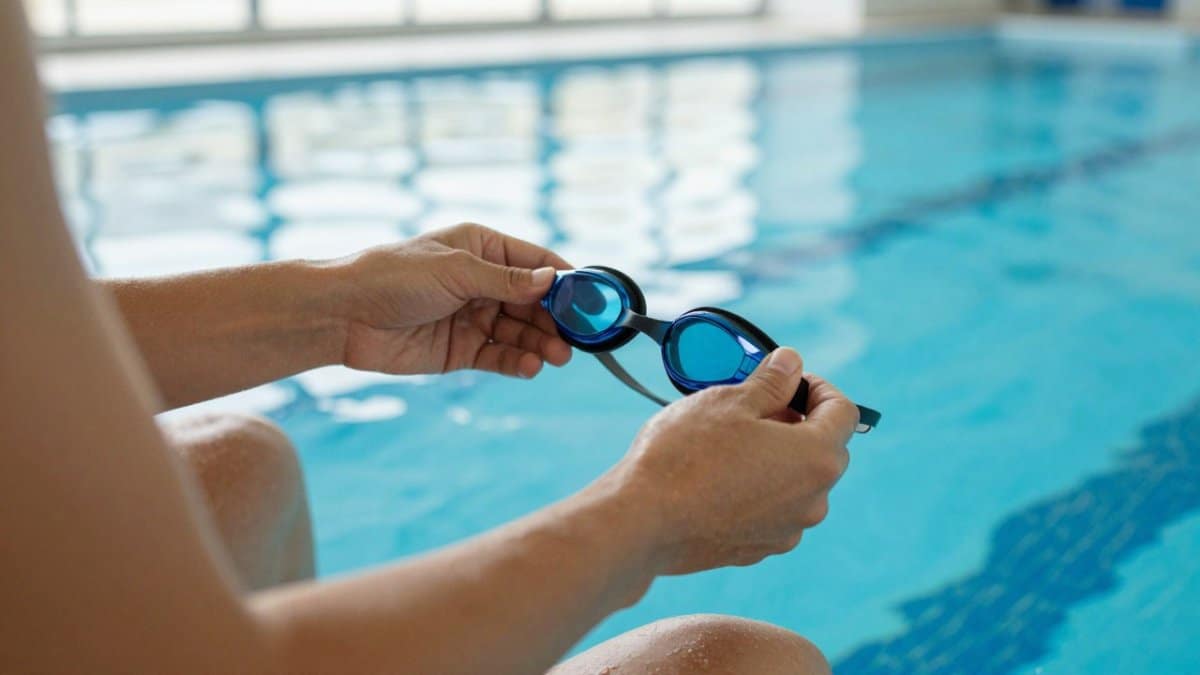
What goggles don’t do is seal the eye completely. Water can leak in, pressure can build, and taking them off with wet hands invites eye rubbing. Goggles also do nothing about the irritation from water that does get through. Generally, swimmers who heal smoothly are those who wait for clearance first and then use goggles as a backup layer, not a shortcut.
Swimming After PRK: How the Timeline Differs
PRK usually means a longer wait than LASIK. PRK removes the surface layer of the cornea instead of creating a flap, so the eye regrows that surface over several days. Many surgeons extend the no-swimming window to three or four weeks or longer, depending on how the surface is healing.
If you are a swimmer weighing your options, that difference matters. Not a candidate for LASIK? Contact the vision correction specialists at Schneider LASIK Centers to find out if PRK is right for you, and ask directly how the water timeline compares.
Getting Back to Training: Pool and Open-Water Precautions
Return to training gradually, even after clearance. Many of the avoidable problems swimmers run into happen after they are cleared, when they go back to old habits too fast. The precautions below are general guidance for the first several weeks back in the water.
Pool training. Start with easy laps in a clean, well-maintained pool, keep goggles on for the entire session, and rinse your eyes with lubricating drops afterward as your surgeon advises. Skip the hot tub and sauna, which harbor bacteria and heat, and avoid the splash-heavy parts of a workout like kick sets with boards that throw water into the face.
Goggle fit and seal checks. A good goggle seal keeps most water away from your eyes, which lowers exposure to chlorine, salt, and organisms. Before you get in, press the goggles gently against your face without the strap and check that they hold suction for a moment, then adjust the strap so it sits snug without pressing on the eye itself. Consider replacing worn gaskets, and avoid borrowing someone else’s goggles. Take them off with dry hands, away from the water’s edge, to avoid the wet-hand eye rub that is one of the most common ways patients irritate a healing eye.
Open-water swimming. Choose calm, clear water first, and avoid swimming after heavy rain, near runoff, or in stagnant areas. Lakes, rivers, and oceans carry bacteria, parasites, and debris, and rivers and lakes near runoff can be the riskiest of all. Sight with your head high rather than opening your eyes underwater, and rinse with lubricating drops once you are out. No body of water is sterile, and “it looked clean” is not protection.
Post-swim care. Rinse the face with clean water, pat the eyes dry without rubbing, and use lubricating drops as directed. Leave contact lenses out until your surgeon says otherwise, and do not swim in a mask that puts pressure around the eyes until you are cleared for it.
Watch out: rubbing your eyes with wet hands after a swim is one of the most common ways patients irritate a healing eye, and it can dislodge a flap that is still sealing. If you feel the urge, use drops instead.
Contact your eye care professional promptly if you notice:
- New pain, redness, or light sensitivity
- Blurry vision that worsens instead of improves
- Discharge or a feeling that something is in the eye
- A sudden change in vision after a swim, even if it settles
Your surgeon’s instructions take priority over any general timeline. Healing progress, dry eye level, and any complication can push your return date later, and that is a normal part of individualized clearance rather than a sign something went wrong.
Book a Clearance Consultation Before Your Next Lap
The only reliable answer to “when can I swim?” comes from your own surgeon’s exam. Schneider LASIK offers blade-free LASIK technology and customized vision correction based on age, prescription, and lifestyle. Discuss your water activities with your surgeon during your consultation.
Learn more about LASIK options or book a consultation to get a personalized clearance timeline.
Frequently Asked Questions
Can I swim with my eyes open after LASIK?
Not during the early healing period. Opening your eyes underwater exposes the corneal flap to pool, lake, or ocean water, which raises the risk of infection and irritation. Even after your surgeon clears you to swim, keep your eyes closed or wear a well-sealed pair of swim goggles. The FDA advises avoiding swimming during recovery without giving a set duration, so follow your own surgeon’s instructions rather than a general rule.
How long after LASIK can I swim in the ocean?
Ocean swimming usually waits longer than pool swimming because salt water, sand, and bacteria add irritation and infection risk. Guidance varies by surgeon, and some surgeons extend the waiting period further. Treat the ocean as a separate milestone from the pool, and get explicit clearance from your eye-care professional before your first open-water swim.
Should I wear goggles when swimming after LASIK?
Yes, once you are cleared to swim. A snug goggle seal keeps water out of your eyes and reduces exposure to chlorine and contaminants. Goggles do not make early swimming safe, though. They can leak, and pressure from a tight strap can be uncomfortable on healing eyes. Wait for surgeon clearance first, then choose goggles that seal well without pressing hard on the eye area.
Can swimmers choose PRK instead of LASIK?
Some swimmers ask about PRK because it avoids a corneal flap. PRK removes the outer corneal surface, which regrows, and its recovery timeline for swimming can differ from LASIK’s. The right choice depends on your prescription, corneal thickness, lifestyle, and your surgeon’s assessment. Discuss your training schedule during your consultation so the plan matches your sport.